Verses checked
Every Qur'anic quotation matched against the mushaf and given its surah and ayah. What cannot be matched is marked, never guessed.
Send audio, video, or a transcript you already have. Verses are matched against the mushaf, the matn is kept apart from the sharh, and not one sentence is reworded — every paragraph carries the second it was said.
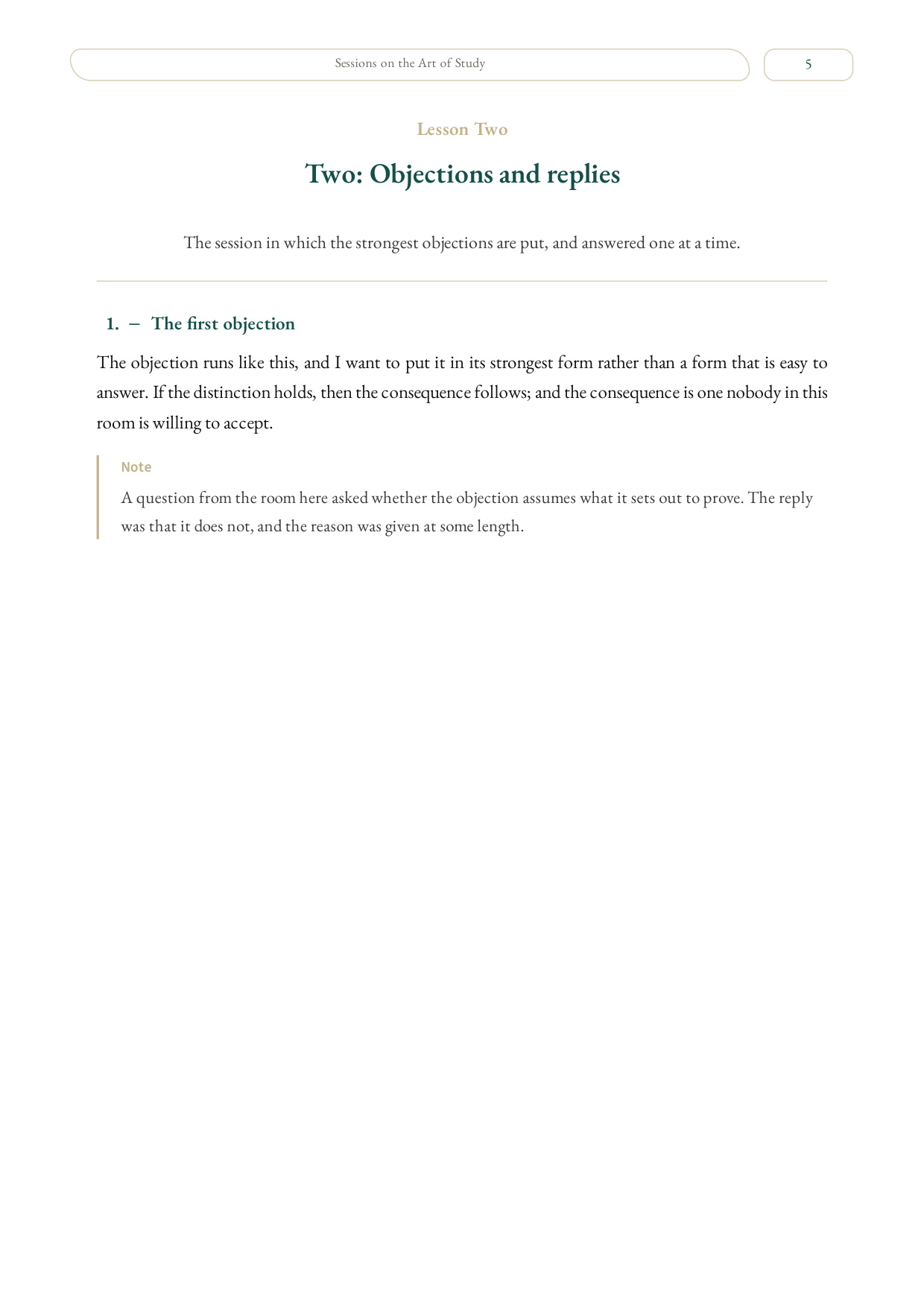
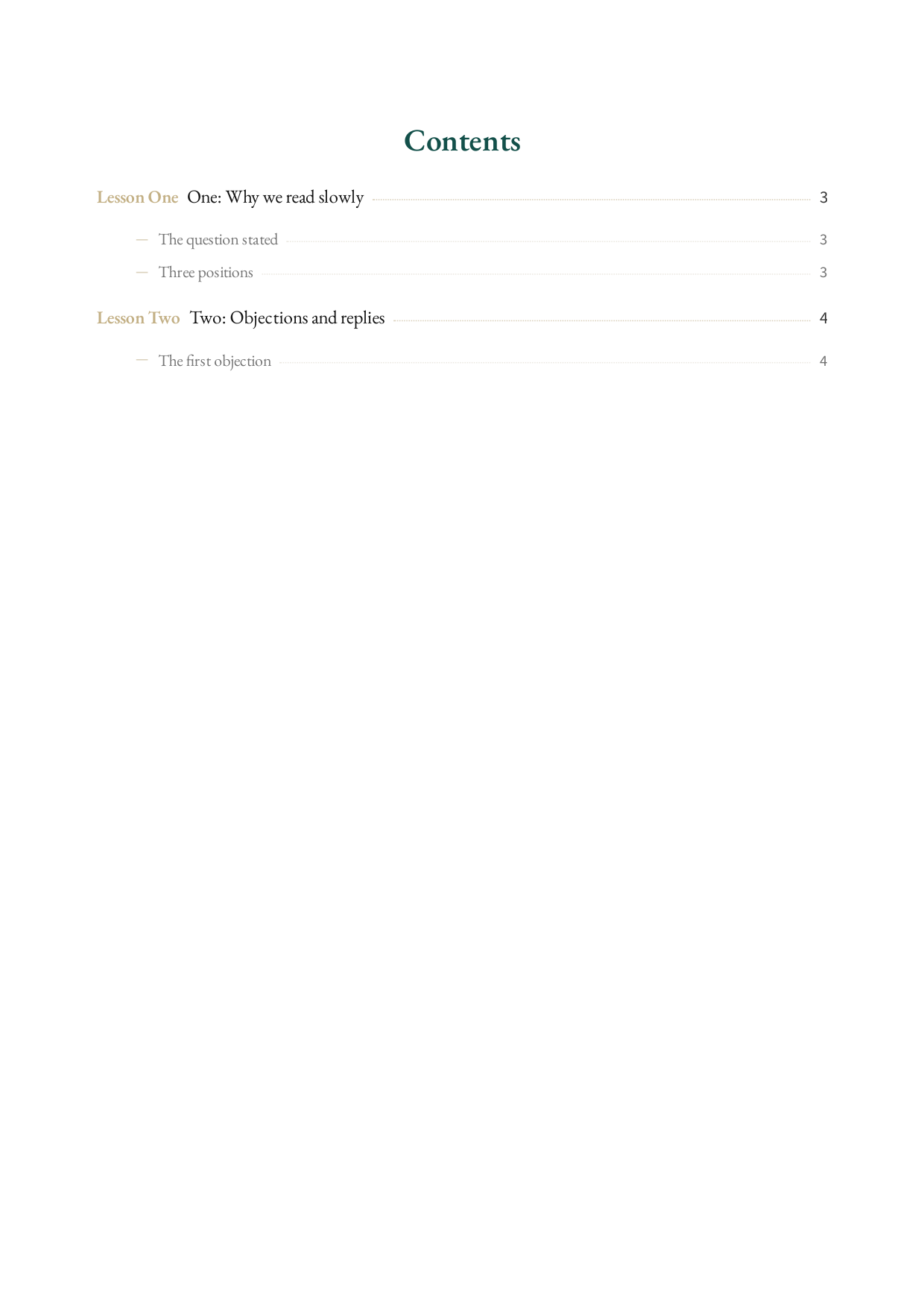
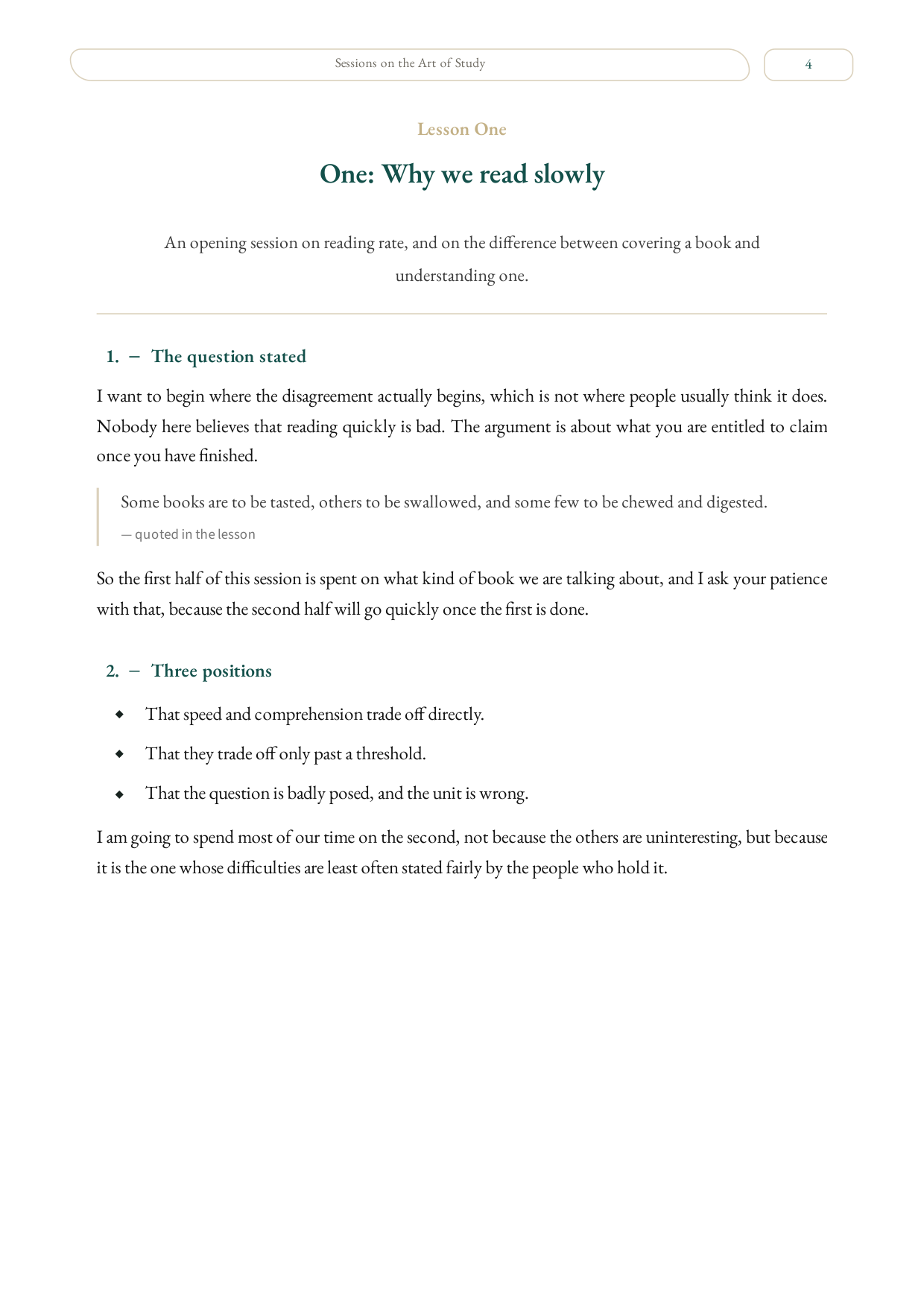
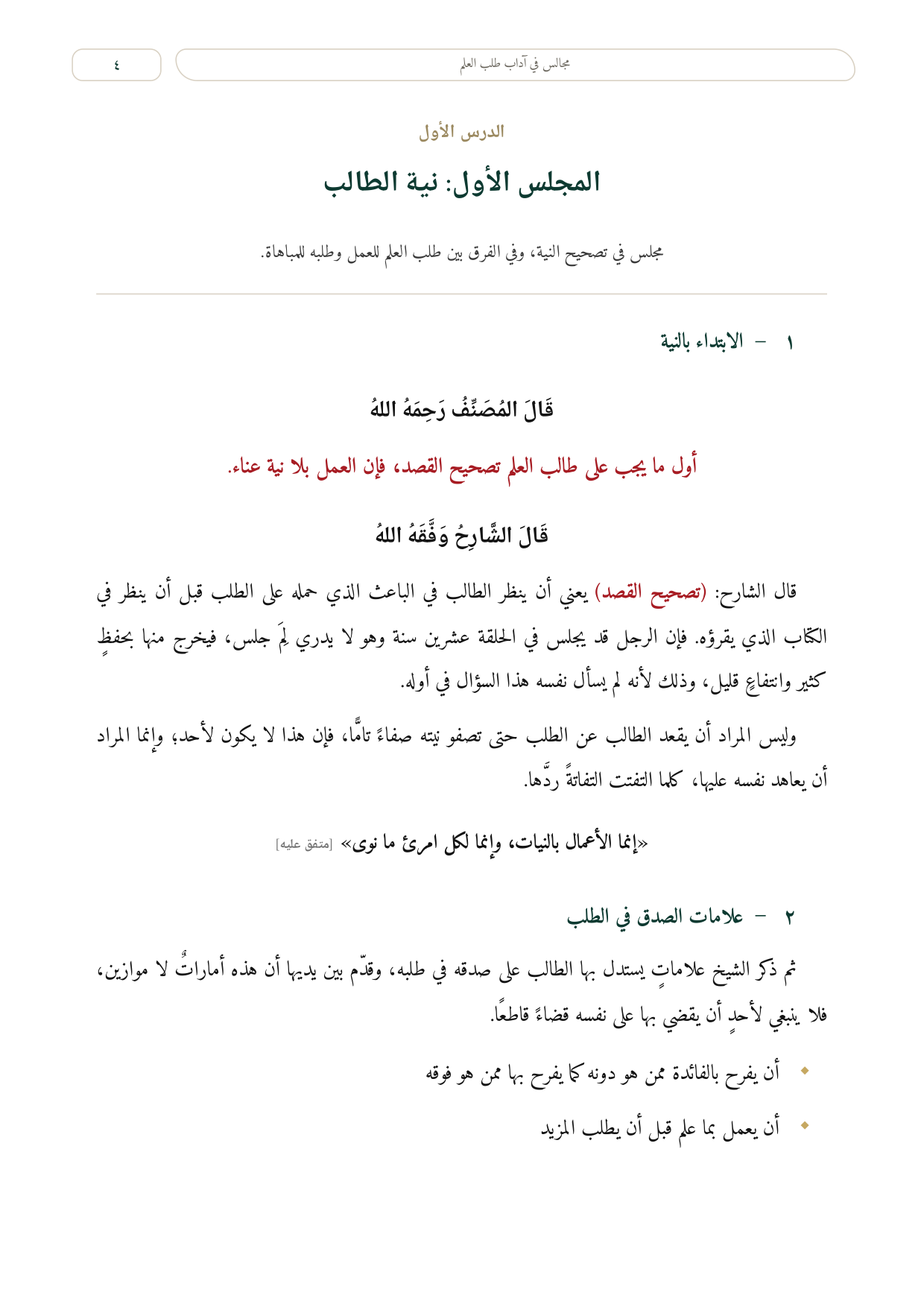
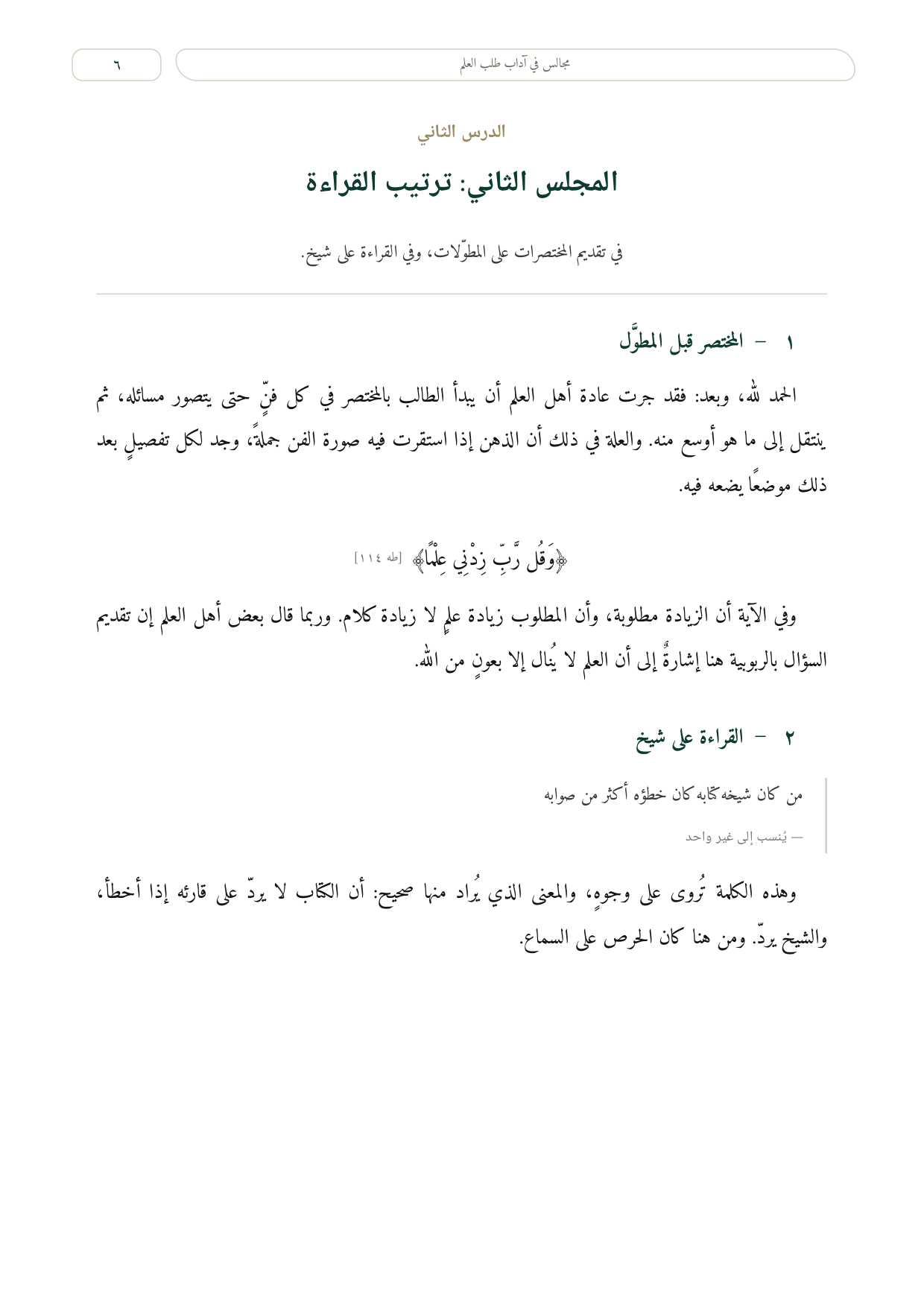
This is the first choice you make, before anything is uploaded.
Every word as recorded, divided into paragraphs at the speaker's own pauses, and typeset. No model ever reads the text. There is no step in this path that could change your lesson.
Punctuation and paragraphs put right, verses and hadith set apart in their own blocks. Nothing summarised, nothing reworded, no headings invented.
Divided into named sections with a contents page, so the lesson can be studied and searched. The headings are the only words on the page that are not the speaker's.
Across three real lessons, 54 of 68 quoted verses came out of the recording wrong. All were corrected. Anything that cannot be matched is marked for review, never guessed.
Anyone can say they were faithful to the recording. This is the part you can check yourself: the second each paragraph starts at, printed beside it, and a report on what we could not account for.
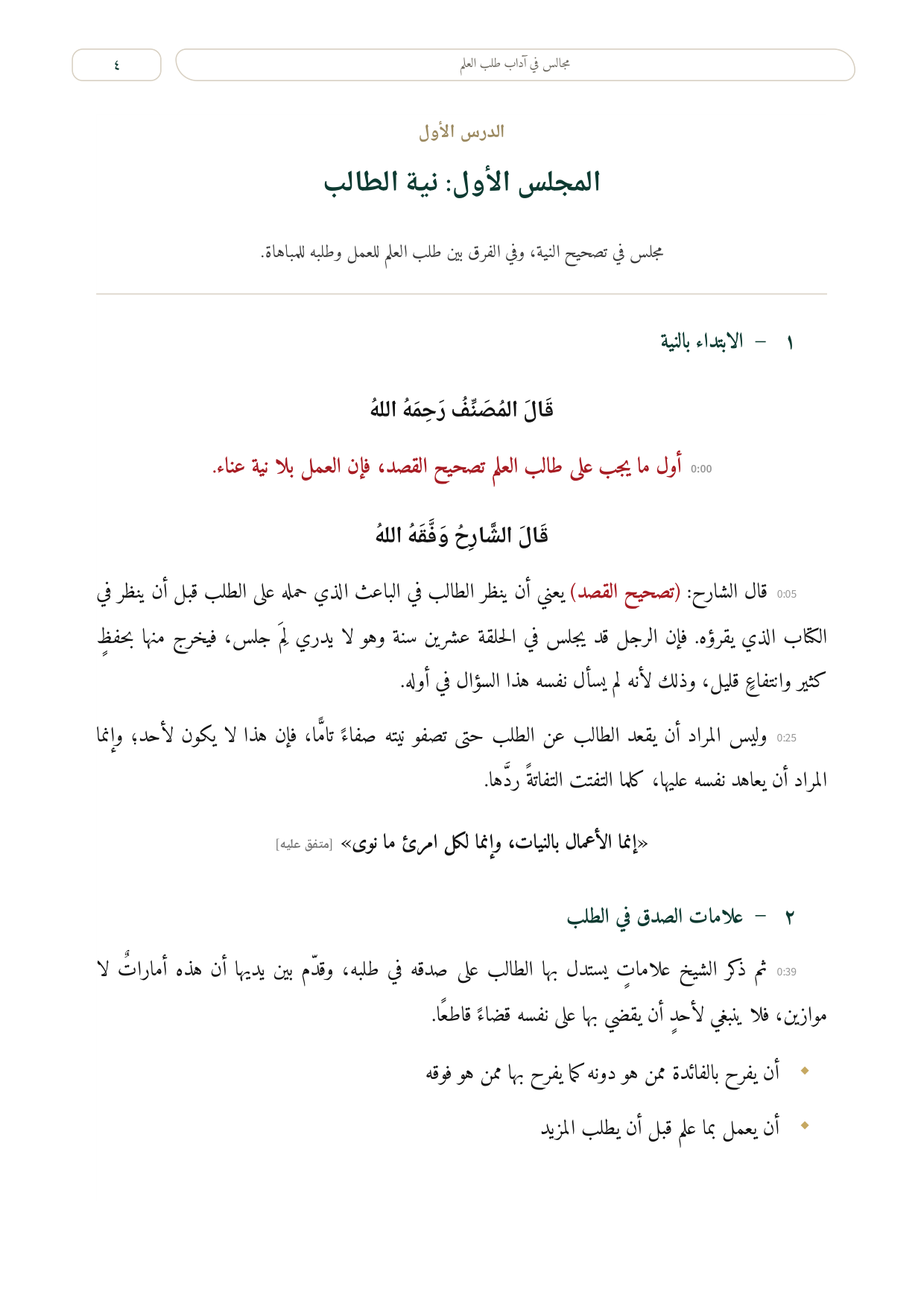
A real report, from a lesson where the wording shifted. We show you rather than tell you.
The full transcript. Nothing the speaker said is removed, and repetitions are kept — a teacher repeats himself on purpose.
A paragraph we cannot find in the recording is reported as untraceable, never given a plausible timestamp.
Every Qur'anic quotation matched against the mushaf and given its surah and ayah.
Where a book is being read aloud, the matn is set apart from the sharh, so the author's words stay the author's.
And where no book is being read, none is invented. A lecture comes back as a lecture — the layout follows the recording, not a template.
Headings added for navigation. Nothing else is added to what was said.
Several lessons submitted together become one book with a contents page.
Already have separate PDFs? Upload them and they are joined into one book, with a contents page and bookmarks.
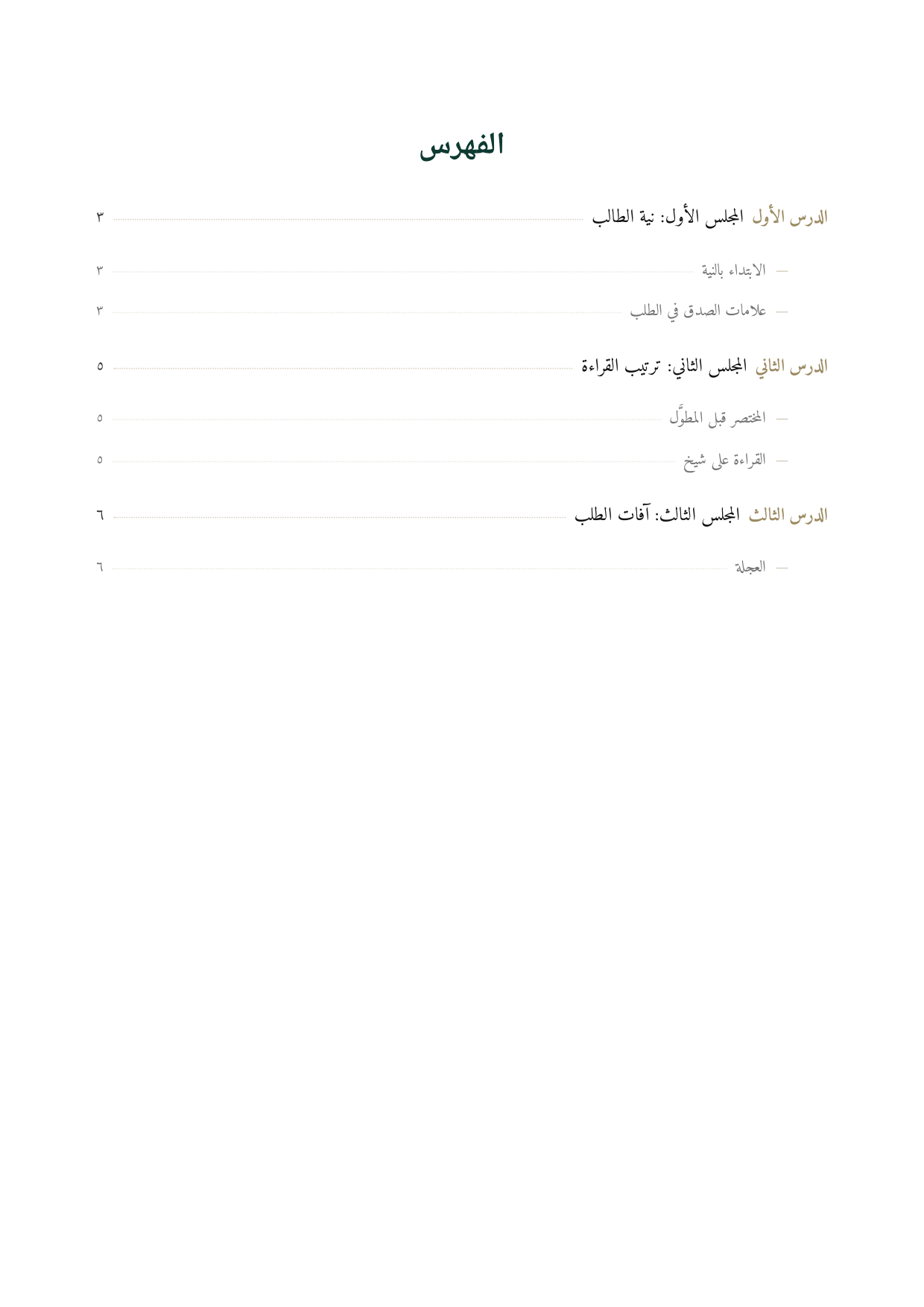
Every Qur'anic quotation matched against the mushaf and given its surah and ayah. What cannot be matched is marked, never guessed.
The author's text is set apart from the teacher's explanation, so one man's words are never given to another.
The full transcript. Repetitions are kept because they are deliberate; only headings are added, and only for navigation.
A contents page whose page numbers are measured, not estimated, with matching bookmarks in the reader's sidebar.
Send a whole series and it comes back as one book. Send more lessons later and they join the same book.
Already have separate PDFs? Upload them and they are bound into one book with a contents page and bookmarks.
Give it a PDF with no contents page and it finds the headings, lists them with page numbers and puts them at the front.
The same book both ways: a PDF to print or send, and a .docx to carry on with. Headings, verses and notes each carry a Word style, so your own house design is one change, not an afternoon.
Cover style, page size, type size, margins, colour, and which parts appear at all. A4, A5, Letter or 6×9.
Both languages, each set the way its own books are set — Uthmani script and naskh for Arabic, not a translated layout.
Anyone can paste a transcript into a chatbot. The question is what it takes to get back a book you would put a shaykh's name on.
Not on a score — on what would have printed. One wrote the verse in Latin letters instead of Arabic. One reversed the meaning of a hadith. One repeated a single line twenty-one times. One turned a sentence about whether a report was authentic into a reference to another scripture entirely. We run the one that wrote the Arabic correctly, and keep a second ready for an outage. You get that decision without having to make it.
The Qur'anic words come from the mushaf itself and are set in the book with the surah and the number. A model writing from memory is writing from memory, however sure it sounds, and it will not tell you which one it was unsure of. What cannot be matched against the mushaf is marked for you instead.
Send a ninety-minute dars, or a whole series at once. It is divided, organised part by part, and every Arabic quotation is counted back into the finished book — so a hadith cannot quietly disappear into the middle, which is the part nobody re-reads. A book usually comes back in about ten minutes.
No Python, no API keys, no model on your own machine, no graphics card, no three separate bills to reconcile at the end of the month. Upload from a phone, close the tab, and the finished book arrives by email.
The same checks, the same layout, the same decisions across a whole series and a whole year. A chat session answers differently on Tuesday than it did on Monday — and a series typeset two different ways is not a series.
One lesson done by hand is an afternoon. A series is a project.
Audio, video, an .srt or .txt transcript, or PDFs you already have. One lesson or a whole series.
The speech is divided and punctuated, the matn separated, and every verse matched against the mushaf.
A lesson is usually ready in about ten minutes, and your free hour never waits in the queue, so it is quicker still. Send more later and they join the same book.
Not if you choose Verbatim — in that mode no model reads your text at all; it is transcribed, divided at your own pauses, and typeset. In the other two modes a model formats the words but is forbidden to add, summarise or reword, and every paragraph is then checked back against the recording. Where the wording may have shifted, we tell you and hold the book for review.
No. Nothing is called sound or weak. Verses are matched against the mushaf; everything else is left as the speaker said it.
No. Repetitions are kept because they are deliberate. Only the headings are added, and only for navigation.
It is yours. The book carries a line saying the speaker has not reviewed the transcript, as printed tafrigh does, so readers know what they are holding.
No. A lecture, a khutbah, an interview, a seminar — one voice from beginning to end is the ordinary case, and it comes back set as what it is. The matn-and-sharh layout appears only when a book really is being read aloud in the recording. Nothing is invented to fill a shape.
Give an email address, receive a code, and send a lesson. No card, and nothing to cancel. It is one hour of audio once — enough for a whole lesson to come back as a finished book, so you can judge it on your own recording rather than on ours.
Nothing stops. Add credits whenever you need them, and they do not expire.
Paid plans open in mid-November. Your free hour is ready now.
Pay for 10 months — get the full 12. All the hours arrive at once, on the day you pay.
15 hours a month$1.00 an hour180 hours, all at once
About fifteen lessons a month. For a teacher putting his weekly dars into books.
Start30 hours a month17% off360 hours, all at once
For someone publishing lessons every week.
Start65 hours a month23% off780 hours, all at once
Double the Regular plan and five hours over, for a masjid or a daʿwah centre with several teachers.
Start140 hours a month29% off1,680 hours, all at once
For a school or a channel with a full teaching schedule.
StartHours you do not use roll over into next month, up to one month's worth. Need more than your plan, or no plan at all? Credits are $1.50 an hour — buy the hours you need, use them on top of a plan or without one, and they never expire. Have a whole archive — hundreds of hours of one shaykh? That is $0.65 an hour, from $750, priced as one project.
Add creditsHow many hours a month do you record?
Credits never expire and commit you to nothing. They are spent after your plan's hours, so they also sit on top of a plan for the month it runs over — you do not have to choose.
More than any plan carries. That is an archive — $0.65 an hour, from $750, priced as one project.
Every plan includes the verse checking, the matn and sharh separation, joining files into one book, and every book as both a typeset PDF and an editable Word file.
No account, no payment. They work on any PDF you already have, and your file is deleted as soon as it is used.
Most published tafrigh has no way in: no contents, no bookmarks, nothing saying which page a chapter starts on. This reads the headings and puts a real contents page in front, with bookmarks to match. You correct the headings before anything is built.
A series of lessons is usually a folder of separate files, and nobody reads a folder. This binds them into one volume in the order you choose, with a contents page and bookmarks. No page is altered.
One hour of audio, free, no card. Pick Verbatim and no AI reads your lesson at all.